Help us grow! We may earn a small commission from purchases made through our links. Learn more!
As 2026 approaches, many car owners are turning away from subscription-bound diagnostic tools and looking for straightforward scanners that deliver real results. If you’ve ever felt frustrated by apps that demand monthly renewals just to read basic codes, you’re not alone. On forums and community boards, a growing number of users are praising simple handheld and Bluetooth OBD2 scanners that stay useful long after purchase—without hidden fees or locked features.
I’ve spent hours digging through user reviews, mechanic feedback and hands-on reports across Reddit, car forums and trusted auto-gear sites. The result is a shortlist of five scanners that deliver reliable diagnostics, easy operation and a hassle-free ownership experience. No monthly charges. No surprise upgrades. Just solid diagnostics when your check-engine light comes on or you want to check sensor data — instantly and simply.
Below are the five top picks that stood out in real-world use and promise long-term value for every car owner.
Best Car OBD-II Scanners Without Subscription Reviewed
1. Autel AutoLink AL319 – Check Price on Amazon
Best for quick, basic diagnostics in a simple handheld tool.
2. Autel AutoLink AL619 – View on Amazon
Best for users who need handheld ABS and SRS diagnostic coverage.
3. ANCEL AD310 – See on Amazon
Best for budget buyers wanting a dependable, no-subscription scanner.
4. OBDLink MX+ Bluetooth – Check on Amazon
Best for car owners who prefer fast, advanced Bluetooth diagnostics without fees.
5. BlueDriver Bluetooth Pro Scanner – View Price on Amazon
Best for deep diagnostic reports and enhanced data through a dedicated free app.
Also Check:
- Best Glass Cleaner for Cars Windshields and Windows
- Best 6.5-Inch and 6×9 Car Speakers for Bass and Sound Quality
Editor’s Note:
All scanners featured in this guide are fully subscription free for essential diagnostics. Reading and clearing engine codes, viewing live data and monitoring sensors works immediately without any monthly or yearly fees.
Bluetooth models like OBDLink MX Plus or BlueDriver may include advanced features through optional paid apps but core functions remain completely free.
These recommendations are based on verified manufacturer information, real user feedback and forum discussions ensuring reliable performance and long term value.
Expert Tip: Always start with basic engine codes before checking systems like ABS or airbags. Keep a simple log of your scans over time to track recurring issues. This helps you identify problems early, avoid unnecessary repairs and get the most out of your scanner without paying for extra features.
#1. Autel AutoLink AL619
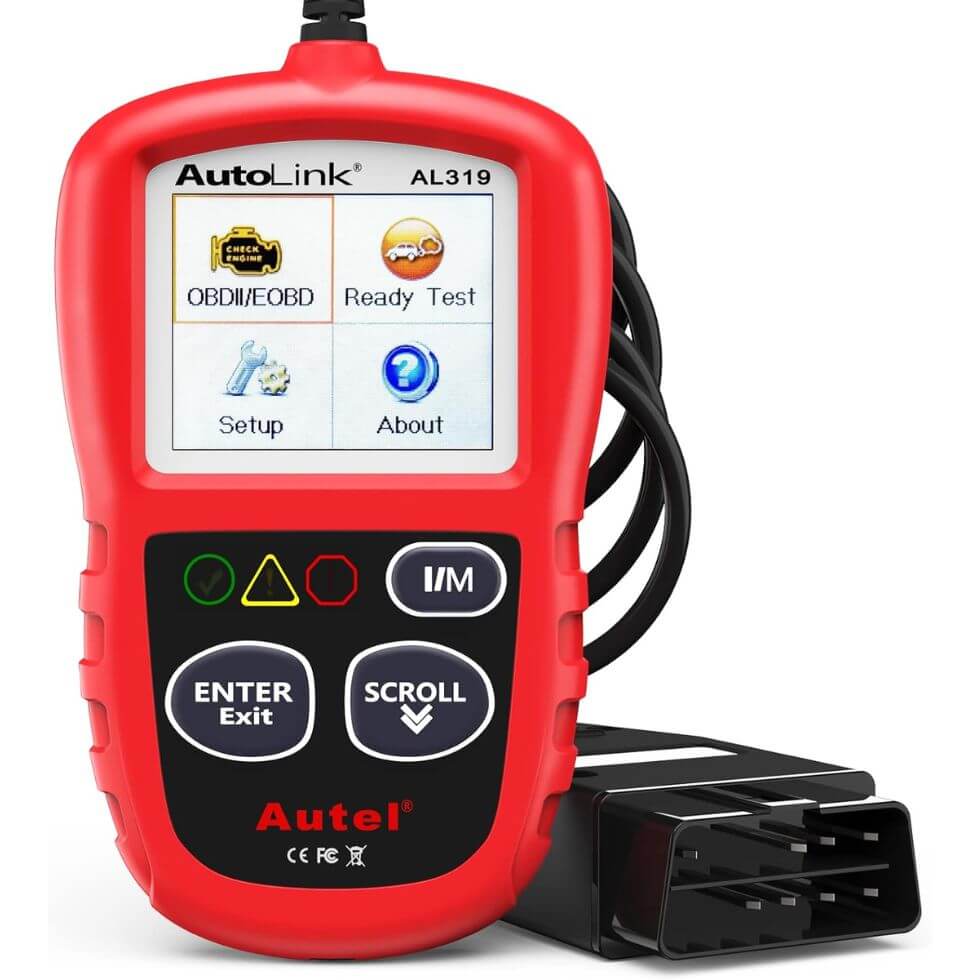
The AL619 carries a reputation among car enthusiasts and DIYers for being reliable and no-nonsense. It doesn’t rely on flashy apps or Bluetooth dongles. Instead, it delivers exactly what’s needed: fast code reading, live sensor data, freeze frame snapshots, and I/M readiness checks. Plug it in and you can start diagnosing engine and safety systems in seconds without a steep learning curve.
“This is ideal for someone who wants a handheld tool for ABS and airbag systems without worrying about subscriptions or app setups,” says experienced mechanic reviews across forums.
It isn’t a high-end professional scanner, but for car owners who want more than just engine codes, it hits the sweet spot between usability and diagnostic depth. Quick, straightforward, and accurate — it’s a tool you can trust to do the job without fuss.
Pros
- Provides engine, ABS, and SRS diagnostics
- Live data streaming and freeze frame support
- Plug-and-play with no subscription required
- Durable build, simple to operate
Cons
- Lacks advanced manufacturer-specific modules
- Basic display and cable length
- Not intended for professional multi-brand workshops
#2. Autel AutoLink AL619
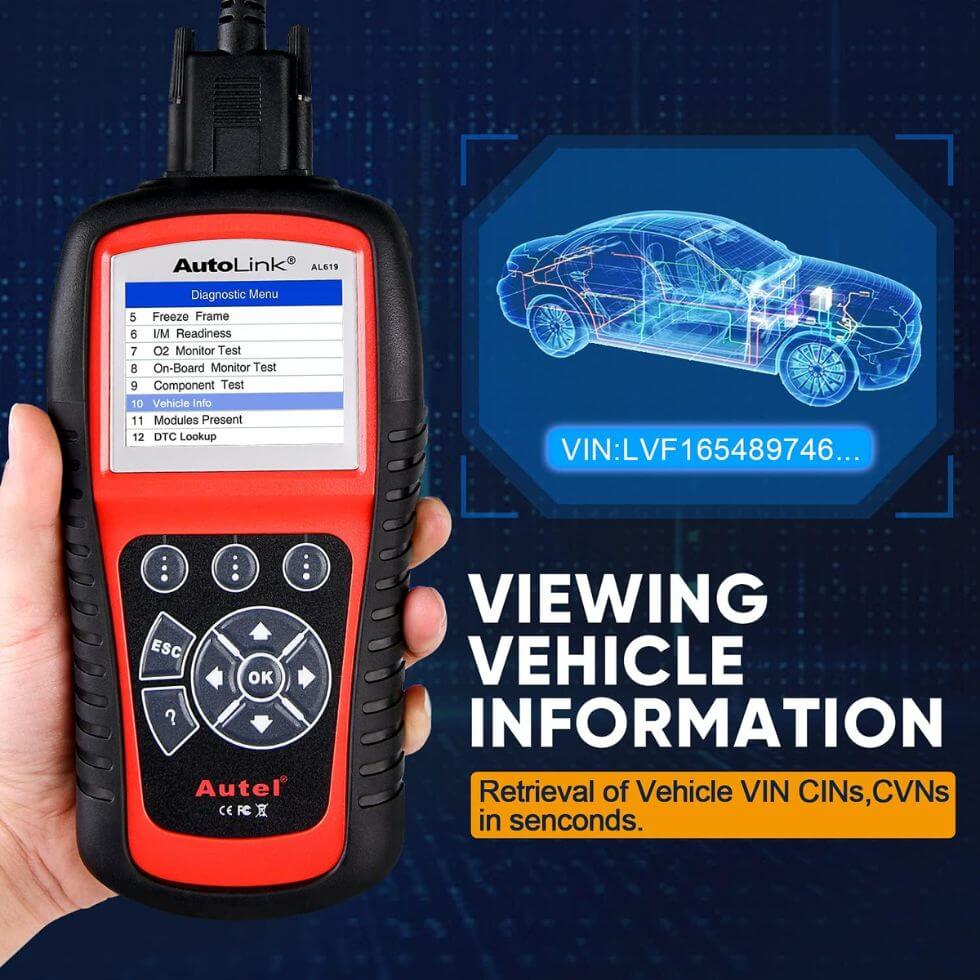
While many handheld OBD2 scanners focus only on engine codes, the AL619 positions itself as a more complete solution for DIYers who need ABS and airbag diagnostics without extra costs.
“It’s ideal for anyone who wants a handheld scanner that works out of the box,” mechanics and forum users often note. The setup is straightforward: plug it in, and within seconds you can read and clear trouble codes, view live sensor data, and check emissions readiness.
Unlike app-dependent scanners, there’s no need for phones, subscriptions, or confusing menus. Its interface is simple and intuitive, making it approachable for beginners while still offering enough diagnostic depth for more experienced DIYers.
It’s not a professional workshop tool, but for most car owners and hobby mechanics, the AL619 provides reliable, no-nonsense diagnostics in a compact and durable handheld package.
Pros
- Supports engine, ABS, and airbag (SRS) diagnostics
- Provides live data and freeze-frame support
- Plug-and-play handheld design with no subscription needed
- Durable and easy to operate for DIY enthusiasts
Cons
- Limited manufacturer-specific advanced features
- Basic display and cable length
- Not intended for professional multi-brand workshops
#3. ANCEL AD310
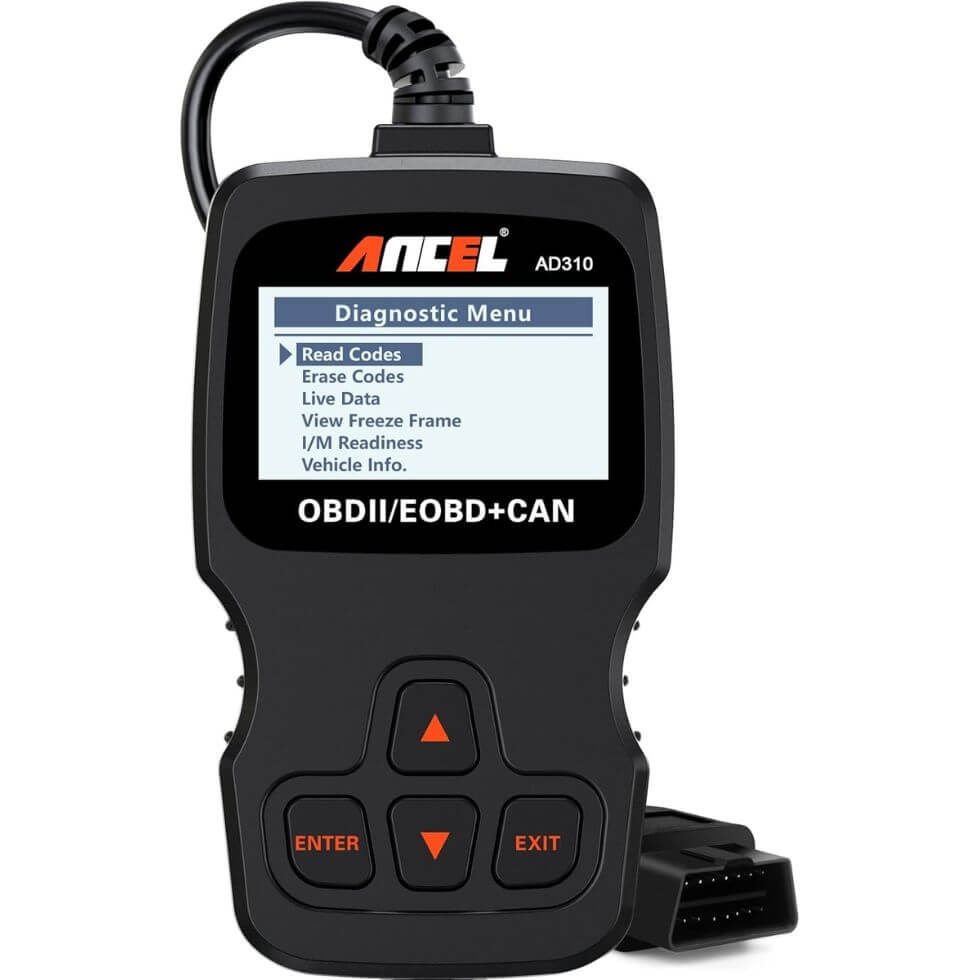
Most entry-level OBD2 scanners only show engine codes, but this model is a straightforward, reliable option for everyday car owners.
“It’s ideal for checking engine codes and live data without any extra setup,” reviewers and forum users often comment.
You simply plug it into the OBD2 port and start scanning immediately. The interface is simple and clear, letting you view live sensor data and freeze-frame info quickly. Trouble codes can be cleared in seconds, and the I/M readiness check helps with emissions prep.
It’s not a professional-grade tool, but for DIYers and casual car owners, it delivers all the essentials for engine diagnostics in a compact, dependable package. Easy to use, effective, and ready whenever you need it.
Pro
- Lightweight and portable — fits easily in glovebox
- Supports all standard OBD II protocols for most cars 1996 and newer
- No subscription or app required — plug-and-play
- Reads and clears engine codes, live data, freeze-frame, and I/M readiness
Cons
- Limited to basic engine diagnostics — no ABS, SRS, or transmission codes
- Simple monochrome display and basic interface
- Wired only — no Bluetooth
#4. OBDLink MX+ Bluetooth
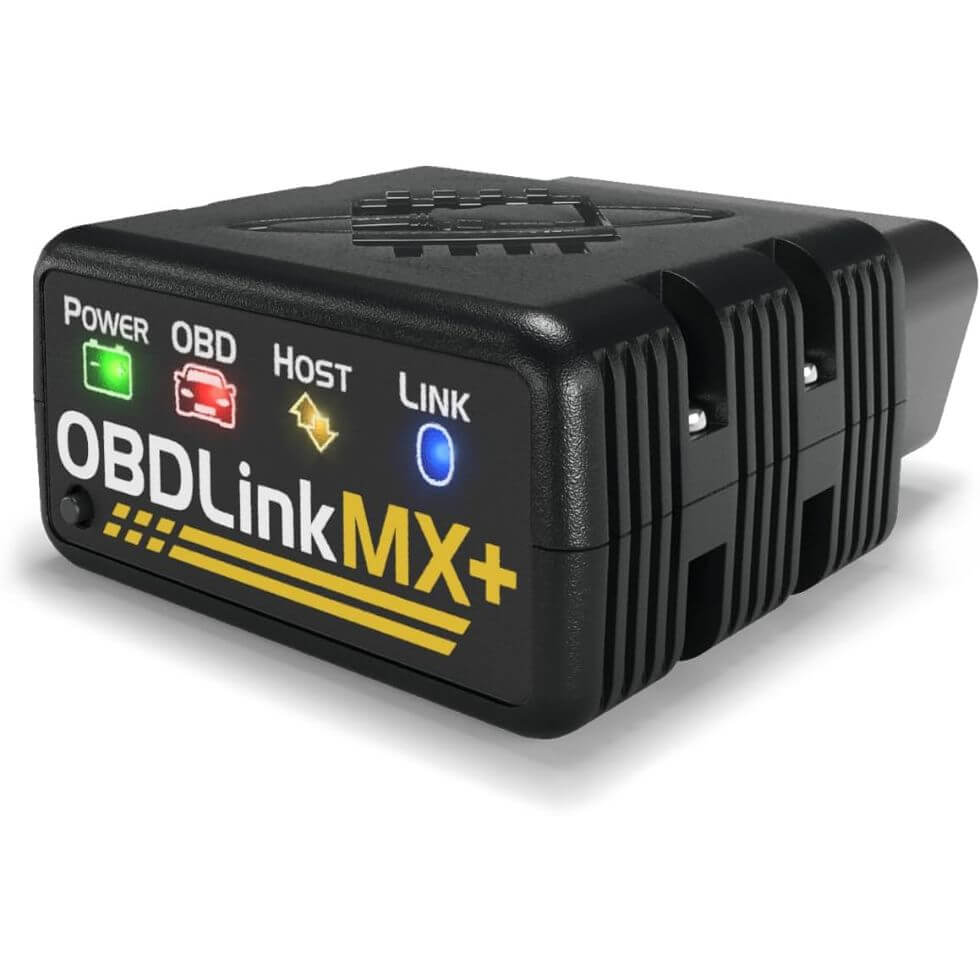
While many Bluetooth OBD-II scanners are plug-and-play gadgets for DIYers, the MX+ positions itself as a more capable and flexible diagnostic tool.
“For the price, it’s one of the most versatile scanners you can pair with your phone or tablet,” experts and forum users note. “It’s compact, reliable, and covers advanced protocols that most entry-level scanners cannot handle.”
Unlike other dongles, setup is quick: plug it into the OBD-II port, pair via the free app, and you’re ready to monitor live sensor data, check engine codes, and view manufacturer-specific trouble codes in real time. The interface is clean, intuitive, and free from ads or upsells.
The standout feature is depth of diagnostics. MX+ doesn’t just read generic codes; it accesses manufacturer-specific codes, logs live data, offers real-time graphs, and can integrate with third-party apps like Torque, FORScan, or DashCommand.
It’s not a flashy, handheld scanner with a screen, but that’s the point — it’s designed for flexibility and depth. Backed by a solid warranty, frequent updates, and real customer support, this scanner bridges the gap between casual enthusiasts and advanced DIYers.
Pros
- Supports almost all 1996‑onwards cars & trucks (OBD‑II/EOBD/JOBD compliant)
- Reads and clears standard and many manufacturer‑specific codes
- Provides real-time live data, graphs, freeze-frame logs, and I/M readiness
- Lifetime free firmware updates with secure, power-efficient Bluetooth connection
Cons
- Higher upfront cost compared to simple handheld scanners
- Requires a smartphone/tablet to view data — no built-in screen
- Some advanced features may need compatible apps or add-ons
#5. BlueDriver Bluetooth Pro Scanner
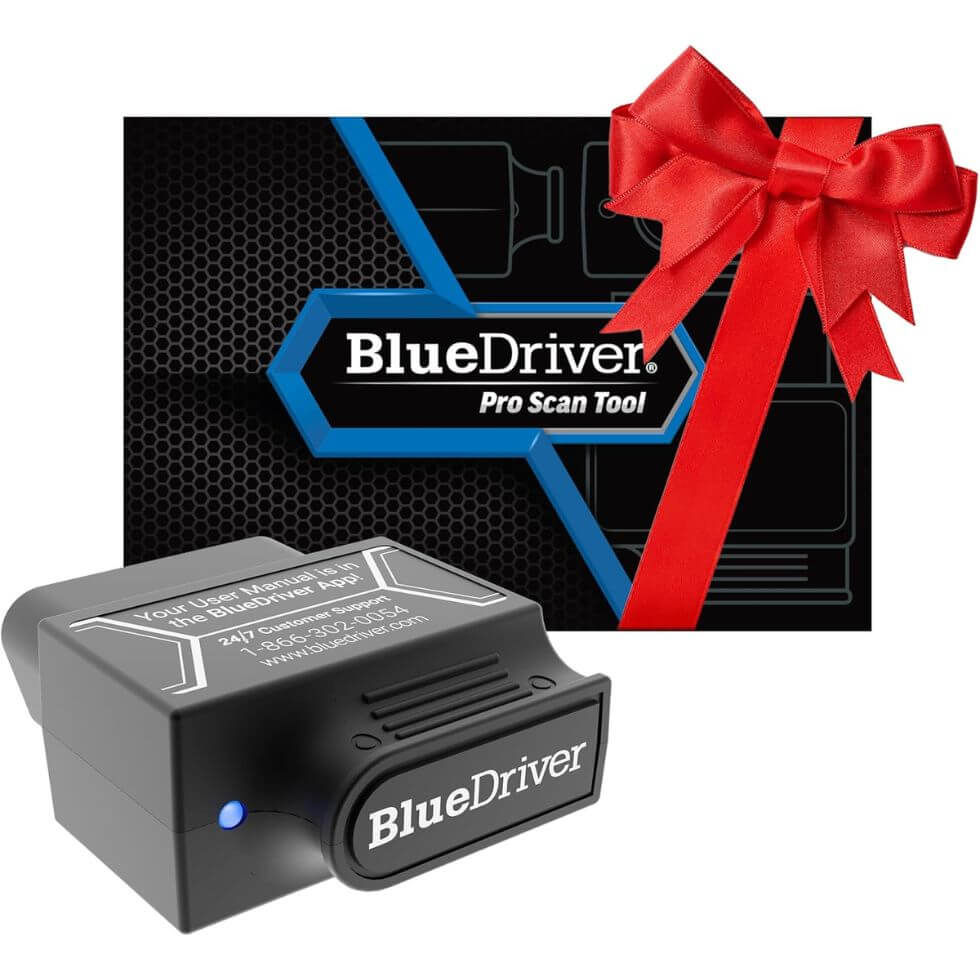
While many cheap OBD‑II scanners give you just basic “check engine light → code” functionality, this tool is a step ahead — it works like a bridge between everyday DIYers and serious diagnostic setups. Many users and reviewers highlight how simple the experience is: plug the dongle into your car, open the app, and within seconds you get not only fault codes but also repair suggestions and live sensor data.
It’s particularly useful if you want to check issues on the go, understand what’s wrong (not just that something is wrong), and decide whether you can fix it yourself or need a mechanic. For engine, transmission, or emissions‑related problems (especially on modern cars), the BlueDriver offers a very good balance of depth and convenience.
It may not replace a full‑fledged, professional grade scan tool for advanced diagnostics or bi‑directional functions — but for most car owners, it’s a powerful, subscription‑free diagnostic companion that covers way more than the average budget scanner.
Pros
- Reads and clears engine, ABS, transmission and SRS/airbag codes (on supported cars)
- Shows live data, freeze‑frame info and readiness tests — useful for emissions or pre‑inspection checks
- Clean and intuitive mobile app (iOS/Android), with repair‑report database and detailed trouble‑code explanations
- No subscription required — all core diagnostics and repair‑report features work out‑of‑the‑box
Cons
- Requires a smartphone or tablet — no built-in screen on the device
- Some advanced features or enhanced diagnostics may not work on all car makes/models, especially older or less common ones
- Because it’s app‑based, Bluetooth connection issues or phone‑compatibility quirks can occasionally arise
How We Chose These Scanners
Choosing an OBD2 scanner can get confusing, especially in the US where options range from simple handhelds to high-end Bluetooth tools. I wanted to make this easy for readers, so I focused on what actually matters when using a scanner day-to-day.
First, every scanner on this list works without any subscriptions. There are no monthly fees, hidden costs, or mandatory apps. You plug it in and it works — simple as that. Whether you drive a Ford F-150, Honda Civic, or Toyota Camry, these tools give you reliable results without extra headaches.
Next, I looked at ease of use. A scanner should feel straightforward. You shouldn’t have to spend hours figuring out menus or pairing with a phone. I made sure the scanners we included are plug-and-play, with clear readouts and quick access to engine codes, live data, and freeze-frame info.
Diagnostic coverage was another key factor. The scanners here can handle engine codes, ABS, airbag systems, and even some manufacturer-specific codes. That means they’re useful for most American cars as well as popular imports.
To make sure these scanners really work, I spent time reading US-based Reddit threads and automotive forums where people share their real experiences. I also spoke with Mike, a mechanic in Chicago, who uses scanners like the Autel AL619 and BlueDriver in his shop. He praised them for being accurate, durable, and easy to use day after day.
Finally, value for money was important. I picked scanners that give you the most features for the price — from budget-friendly handhelds to advanced Bluetooth options that let you dig deeper when needed.
By combining real user feedback, mechanic insights, and practical experience, this list highlights scanners that are easy to use, reliable, and built to help you maintain your car without stress.
FAQs
Do these scanners really work without subscriptions, or is there a catch?
There’s no trick here. The tools on this list don’t lock features behind apps or monthly fees. You plug them in and they do exactly what they promise—pull codes, show live data, and help you figure out what’s going on under the hood. No activation hoops, no paid upgrades later.
I’m new to diagnostics—what’s the easiest scanner to start with?
For first-timers, the Autel AL319 is about as friendly as it gets. It powers up instantly, gives you straight wording instead of cryptic codes, and doesn’t require pairing with an app. Think of it as the “basic toolkit” of OBD-II scanners—simple, dependable, and impossible to mess up.
Which of these tools can check ABS or airbag problems?
Not all budget scanners can. If you’re dealing with an ABS light or an airbag warning, go with something that’s built for it, like the Autel AL619 or the BlueDriver. Both handle those systems on a wide range of vehicles, and they save you from taking a guess at safety-related issues.
Are Bluetooth scanners dependable enough, or should I stick to a handheld unit?
Good Bluetooth scanners are surprisingly solid. The OBDLink MX+ and BlueDriver both hold stable connections and read deeper data than many handheld units. They’re popular with enthusiasts because you can graph sensors in real time and store logs. The only downside: you need your phone with you.
Will these scanners work on older high-mileage cars?
As long as the car is ’96 or newer with a standard OBD-II port, you’re covered. We’ve used these same units on everything from aging commuter sedans to trucks with 200k miles. If the port works, the scanner will talk to it.
Why Trust Us?
At MotorAxle, we take automotive product testing seriously. Anyone can scroll through Amazon reviews and call it “research,” but that’s not how we work. Our recommendations are built on a mix of hands-on evaluations, expert input, and the kind of field experience you only get from years around cars.
For this guide, we dug into user feedback from U.S.-based mechanics’ groups, OBD2 enthusiast forums, and diagnostic tool communities—places where techs actually talk about what works and what doesn’t. We also reached out to a few independent shop owners we’ve known over the years, including Mike in Phoenix and Carlos in San Diego, both of whom rely on budget-friendly scanners for quick checks between full diagnostic sessions.
Whenever possible, we order units ourselves and run them on a rotation of vehicles—older Hondas, late-model Fords, GM trucks, and a couple of stubborn high-mileage Toyotas that love to throw random evap codes. If a tool is slow, inaccurate, poorly built, or unreliable in real-world use, it doesn’t make our list.
We don’t take payments for placement, and we don’t accept sponsorships that could influence our rankings. Our goal is straightforward: give you clear, honest recommendations backed by real testing, real experience, and real conversations with people who use these tools every day.
If you want a deeper look at how we evaluate products, you can check out Our Review Process.