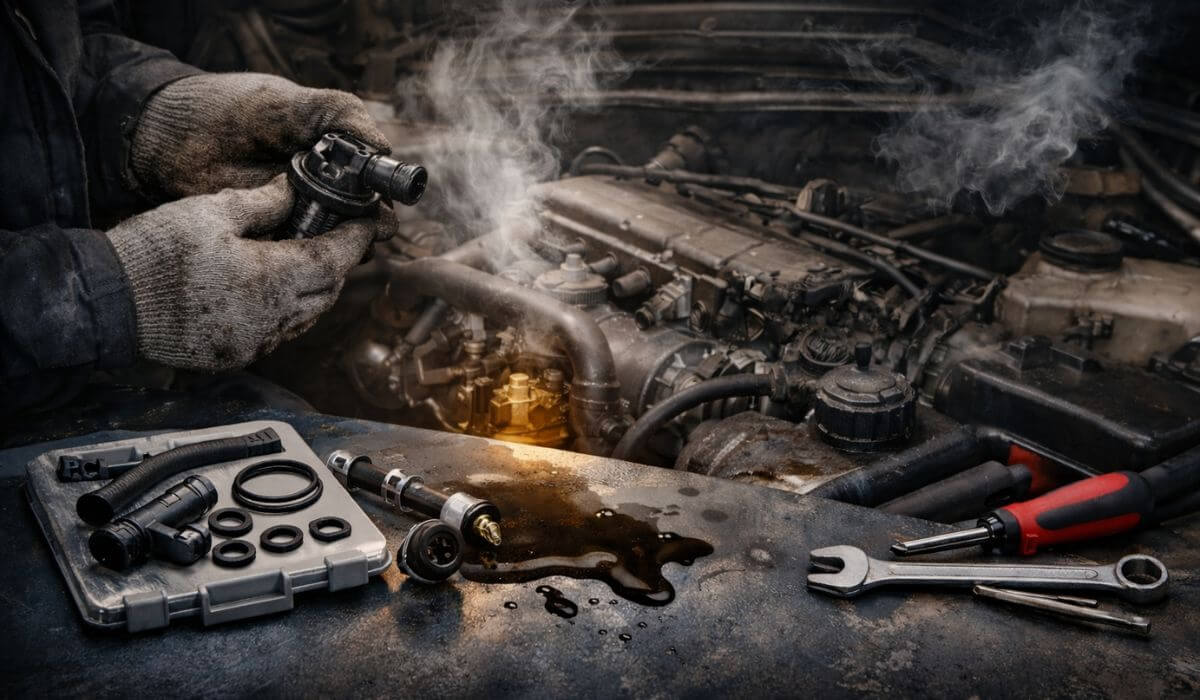
The crankcase ventilation (PCV) system is a key element of modern engines. It stabilizes internal pressure and reduces emissions. Using a PCV repair kit lets you quickly fix common malfunctions without replacing the unit. System failures cause oil leaks, engine performance issues, and accelerated wear of engine components. Maintenance should be performed promptly to prevent expensive failures.
How the PCV System Works
The system’s principle of operation is to remove gases that escape from the combustion chamber into the crankcase. These gases mix with oil mist, increasing crankcase pressure. The PCV valve regulates their return to the intake manifold, where they are combusted.
Regulation depends on engine load. At idle, the flow is limited to maintain the mixture’s stability. The valve opening increases as speed rises, resulting in better pressure reduction. The system helps maintain optimal engine performance while preventing dangerous material buildup.
Typical Problems in the PCV System
Over time, system components wear out or become contaminated. Most often, problems arise due to constant exposure to temperature, aggressive gases, and lubricants. This leads to a loss of tightness and incorrect flow regulation. If left unaddressed, these issues can gradually worsen and lead to more serious engine damage over time. Regular inspection of the PCV system helps detect early signs of failure before major repairs are needed.
The most common malfunctions include:
- damage or loss of elasticity of the membrane;
- air leaks due to cracks or worn seals;
- oil leaks due to excessive pressure;
- rough engine operation or vibration;
- blockage of ventilation passages due to carbon deposits.
These issues directly affect engine operation. For example, vacuum leaks can change the composition of the fuel mixture, and increased pressure can push oil through weak spots in the seal.
What Is Included in a PCV Repair Kit
The repair kit is designed to restore proper function without replacing the entire assembly. It contains parts that most often fail. These components are exposed to constant thermal stress, oil vapors, and pressure fluctuations, which gradually reduce their efficiency. Timely replacement of these elements helps maintain correct engine operation and prevents further system imbalance.
The main components usually include:
- a diaphragm responsible for pressure regulation;
- sealing rings to restore tightness;
- protective covers or caps;
- springs or latches (depending on the design);
- small installation components such as clips or fasteners.
Each component serves a specific function. Replacing worn parts restores the correct pressure distribution and stable gas circulation.
Benefits of Repair Instead of Full Replacement
A complete replacement of the PCV unit is often costly, especially if the valve is integrated into the valve cover. In such cases, a repair kit becomes a more rational solution. It allows you to focus only on the worn elements instead of replacing fully functional parts, which is especially important for maintaining overall system integrity and avoiding unnecessary expenses.
The main advantages of this approach:
- significant cost savings compared to a new unit;
- faster repair process without complex disassembly;
- preservation of original factory components;
- avoids compatibility issues;
- allows localized repairs.
In addition, repair allows you to minimize interference with other engine systems. This reduces the risk of additional damage or installation errors.
The PCV system plays an important role in maintaining stable engine operation and pressure control. The system can develop malfunctions that lead to oil leaks, engine failures, and excessive component damage. The repair kit is an efficient solution that enables users to quickly restore system operations. The solution offers key benefits, including easy installation and reliable performance. The engine requires regular maintenance checks to prevent major failures and extend its operational lifespan.